 Skip to content
Decoding DIN
Table of Contents
Categories

Jessie

1. Understanding Polypropylene Strapping in Modern Procurement
Core performance characteristics buyers must evaluate
Polypropylene strapping serves as a lightweight yet resilient containment medium, and procurement teams must evaluate attributes such as break strength, elongation behavior, weld efficiency and durability under vibration. These indicators determine whether the strap can maintain tension during transit, especially when exposed to fluctuating temperatures or long-distance mechanical agitation.
Typical applications across industries and load types
PP strapping is widely utilized for carton bundling, light palletizing, agricultural packaging, logistics consolidation and various medium-load securing tasks. It thrives particularly in high-throughput environments where rapid machine cycles and repetitive bundling demand predictable performance and uniformity
How PP strap compares to PET, steel and woven options
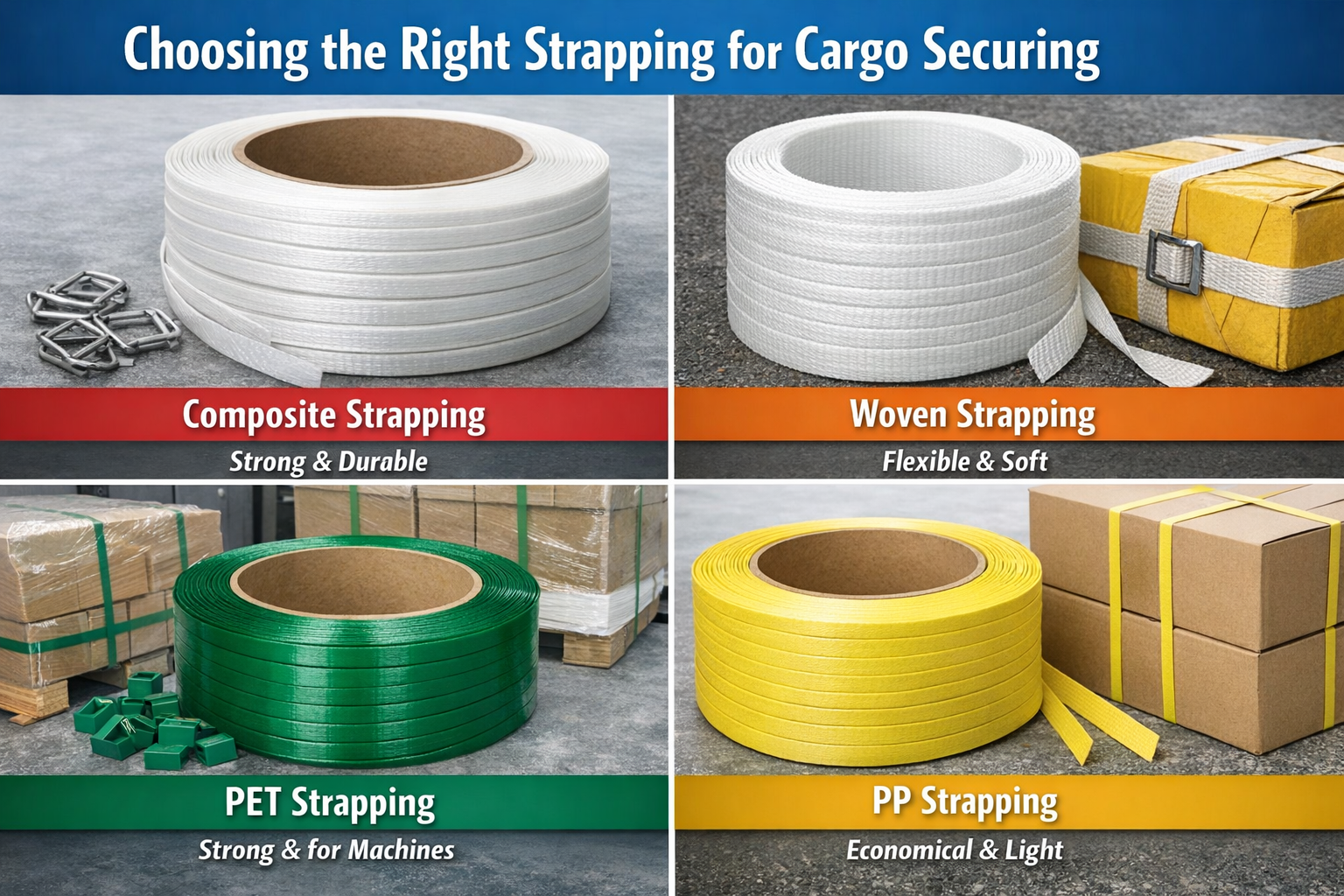
Compared to PET, polypropylene provides more elongation and lower cost, although with reduced tensile performance. Against steel, PP offers a safer, corrosion-free and easier-to-handle alternative for lower-load applications. Woven strapping delivers higher system strength but usually at a premium, making PP the preferred selection when buyers target economical, automated carton and pallet sealing.
2. Cost Drivers in Polypropylene Strapping
Resin price fluctuations and their downstream impact
Polypropylene resin constitutes the majority of product cost, and global petrochemical volatility directly impacts strap pricing. Buyers tracking resin indexes gain an advantage in forecasting budgeting cycles and negotiating more stable long-term commitments.
Manufacturing variables that influence final pricing
Factors such as extrusion speed, embossing patterns, additives, QC throughput and automation levels determine the cost of production. Plants leveraging high-line-speed equipment and precision dies often deliver tighter tolerances at more competitive rates.
Hidden costs within logistics, tariffs and procurement cycles
Oversized shipments, tariff shifts, port congestion and currency fluctuations can quietly erode savings. Procurement professionals who diversify sourcing regions or negotiate flexible logistics terms often achieve better cost resilience.
3. Selecting the Right Grade for Cost Efficiency
When to choose standard, embossed or high-tensile PP
Standard grades suffice for lightweight cartons, while embossed variants enhance grip for machine feed stability. High-tensile PP is appropriate for heavier loads where break strength is critical yet steel or PET would be excessive.
Matching strap specifications to real-world load requirements
Accurate load analysis prevents unnecessary upgrades. Strap selection should align with compression specifications, pallet stability goals and downstream handling processes to avoid inflated material costs.
Avoiding over-engineering that inflates total spend
Over-specification is a common waste. Excessive width, thickness or tensile capacity may offer marginal performance gains but drastically increase annual usage costs without delivering proportionate value.
4. Width, Thickness and Break Strength Optimization
Balancing strap dimensions with containment performance
Proper calibration between strap size and load requirements ensures that materials are neither inadequate nor overly robust. Procurement teams should reference standardized break-strength tolerance charts before finalizing specs.
Cost savings by optimizing break strength instead of over-sizing
Focusing on break strength metrics rather than defaulting to wider or thicker straps allows buyers to maintain performance while minimizing polymer consumption.
Buyers’ checklists for dimensional consistency
Consistent width, thickness and camber are vital to machine performance. Checklists should include tolerance limits, coil uniformity and emboss depth measurements to ensure precision across every batch.

5. Coil Length and Core Size Considerations
How longer coil lengths reduce changeover downtime
Extended coil lengths allow machines to run longer between reloads, resulting in fewer stoppages, reduced labor time and smoother production flow.
Choosing core sizes for automation compatibility
Core dimensions must align with equipment specifications, especially in high-speed lines. Incorrect core sizing leads to machine jams or inefficient feeding patterns.
Calculating cost-per-meter based on coil configuration
Optimizing coil length and density allows buyers to reduce cost-per-meter, as longer coils often translate to lower packaging cost per operational hour.
6. Color, Printing and Branding Options
When customization improves supply-chain visibility
Color-coding and custom printing streamline inventory identification, mitigate cross-shipment errors and support traceability initiatives.
Cost impact of custom colors and on-strap printing
While customization enhances brand presence, buyers must weigh incremental costs associated with pigments, ink adhesion and additional manufacturing passes.
Branding strategies that justify added expense
Strategic branding—such as printing QR codes or batch data—can reinforce quality assurance and logistics transparency, thereby offsetting the added investment.
7. Evaluating OEM/ODM Advantages for Global Brands
Custom specification support from factory-level engineering
Access to engineering teams allows buyers to co-develop strap geometries, emboss patterns and performance parameters tailored to exact line requirements.
Tooling, mold and formulation flexibility for unique needs
OEM/ODM partners can modify extrusion dies, adjust polymer blends or deploy UV stabilizers to create differentiated product lines privileged for brand owners.
Cost benefits of consolidated manufacturing partnerships
Centralizing production through a capable manufacturer reduces overhead, minimizes multi-supplier inconsistencies and strengthens long-term commercial leverage.
8. Quality Control Practices That Prevent Losses
Key QC checkpoints: tension, elongation and weld strength
Routine checks on tension retention, break elongation and weld integrity ensure that the strap performs reliably across diverse handling conditions.
Inspection routines that reduce breakage and returns
Well-defined inspection sequences allow early detection of off-spec coils, preventing downstream failures or customer complaints.
Supplier audits that safeguard long-term cost stability
Audits encompassing equipment capability, raw material traceability and environmental control help maintain stable quality and predictable pricing.

9. Packaging and Palletization Efficiency
How proper pallet schemes reduce damage in transit
Stable pallet structures minimize deformation and mitigate strap tension loss during long hauls.
Material-saving packaging options from manufacturers
Suppliers offering optimized coil packaging reduce wastage, improve loading density and support eco-conscious procurement strategies.
Optimizing container loading for lower freight costs
Efficient carton and pallet configurations lead to higher container utilization, reducing cost per shipped unit.
10. Machine Compatibility and Operational Costs
Aligning strap specs with semi-auto and fully-auto machines
Strap smoothness, stiffness and flatness must complement machine feeder systems to maintain cycle speed and reduce misfeeds.
Reducing machine wear with consistent strap tolerances
Accurate tolerances prolong machine life, lower maintenance frequency and reduce internal operational expenses.
Calculating total cost of ownership in automated lines
Evaluating strap costs in conjunction with machine performance metrics provides a clearer view of the true operational expenditure.
11. Minimizing Waste and Improving Usage Efficiency
Techniques to reduce strap scrap in daily operations
Correct tension settings and proper sealing techniques reduce residual material waste.
Training strategies that cut misapplications
Eco-friendly packaging materials bolster ESG reporting and sustainability commitments. This enhances brand attractiveness among environmentally conscious clients. Responsible procurement aligns with long-term strategic positioning.
Monitoring systems for consumption tracking
Implementing usage analytics reveals inefficiencies, enabling buyers to adjust order quantities and improve cost predictability.
12. Comparing Suppliers for Pricing Stability
Evaluating long-term contracts vs spot purchases
Long-term agreements often deliver price insulation and priority production capacity.
Factors that determine a supplier’s cost resilience
Facilities with efficient resin sourcing, modern machinery and flexible capacity typically maintain steadier pricing.
How multi-plant or multi-region supply reduces risk
Geographic diversity mitigates disruptions from regional regulations, weather events or port delays.

13. Lead Time Management for Lower Carrying Costs
Planning replenishment cycles to prevent overstock
Accurate forecasting eliminates excessive inventory that ties up capital.
Mitigating delays through proactive supplier coordination
Regular communication ensures timely adjustments to production schedules, preventing rushed shipments or inflated freight charges.
Lean procurement strategies for high-volume buyers
Adopting lean principles helps brands synchronize ordering frequencies with consumption patterns.
14. Sustainability and Cost Optimization
Using recycled-content PP without compromising strength
Modern recycled-content PP blends retain robust mechanical properties while reducing material expenses.
Energy-efficient manufacturing and its pricing benefits
Plants employing high-efficiency extrusion lines and low-waste trimming practices typically offer more competitive pricing.
How eco-focused specifications influence lifetime costs
Sustainable choices enhance brand reputation and may reduce compliance costs in markets with stringent environmental regulations.
15. Total Cost of Ownership Analysis
Calculating cost beyond price-per-coil
Evaluating costs across logistics, machine downtime, and failure rates gives a complete picture of procurement efficiency.
Evaluating failure rates, returns and downtime
Low-quality straps generate costly disruptions that quickly outweigh marginal price savings.
Forecasting long-term savings through optimized specs
Precise specifications lead to predictable performance, reduced waste and substantial annual cost reduction.
16. Future Trends That Influence PP Strapping Costs
Automation-driven specification shifts
As automated lines become more sophisticated, strap uniformity and feedability will increasingly dictate procurement choices.
Evolving resin technologies and material efficiency
Advancements in polymer science continue to enhance strength-to-weight ratios, offering new cost-saving pathways.
Global trade dynamics affecting procurement strategies
Import regulations, energy markets and supply chain realignments will continue to reshape pricing structures worldwide.
17. Practical Buyer Checklists for Immediate Cost Control
Pre-purchase specification checklist for procurement teams
Define width, thickness, break strength, coil length, core size, emboss type and machine compatibility parameters before RFQs.
Supplier comparison matrix for pricing, QC and lead times
Evaluate suppliers by pricing stability, QC rigor, production capacity, engineering support and geographic flexibility..
Ongoing performance review checklist to maintain savings
Monitor failure rates, strap consumption patterns, delivery punctuality and quality consistency to keep costs under control
Related Posts

Top 5 Common Mistakes in Cargo Securing and How to Avoid Them

Export Packaging Case Study: Using Composite Strapping Efficiently
