 Skip to content
Best Practices for Securing Steel Products Using Composite Straps
Table of Contents
Categories

Jessie

Steel products—whether coils, sheets, plates, pipes, or structural profiles—represent some of the most challenging cargo to secure in global logistics. Their weight, rigidity, sharp edges, and high value demand load-securing systems that deliver strength, adaptability, and reliability under dynamic transport conditions. Composite straps have become a preferred solution for steel manufacturers, service centers, and exporters seeking safer and more efficient load restraint.
This article outlines proven best practices for securing steel products using composite straps, focusing on performance, safety, and compliance across modern supply chains.
1. Understanding the Challenges of Steel Cargo Securing
1.1 The Unique Risk Profile of Steel Products
Steel cargo is characterized by extreme density, concentrated load points, and limited tolerance for movement during transit. Even minimal shifting can result in edge damage, deformation, or container wall impact, leading to costly claims and safety hazards. Traditional rigid strapping systems often struggle to accommodate these risks without introducing recoil or corrosion issues.
1.2 Transport Stresses in Steel Logistics
Steel shipments are exposed to vibration, acceleration forces, braking impact, and lateral movement throughout road, rail, and sea transport. These forces are amplified during transshipment, port handling, and container unloading. A securing system must therefore maintain tension while absorbing shock energy rather than transferring it directly to the cargo.
1.3 Why Load Securing Strategy Matters
Effective load securing is not simply about restraining weight—it is about managing energy. Selecting the correct strapping system, tensioning method, and application pattern directly influences cargo integrity, worker safety, and regulatory compliance.
2. Why Composite Straps Are Well-Suited for Steel Products
2.1 High Tensile Strength with Controlled Elongation
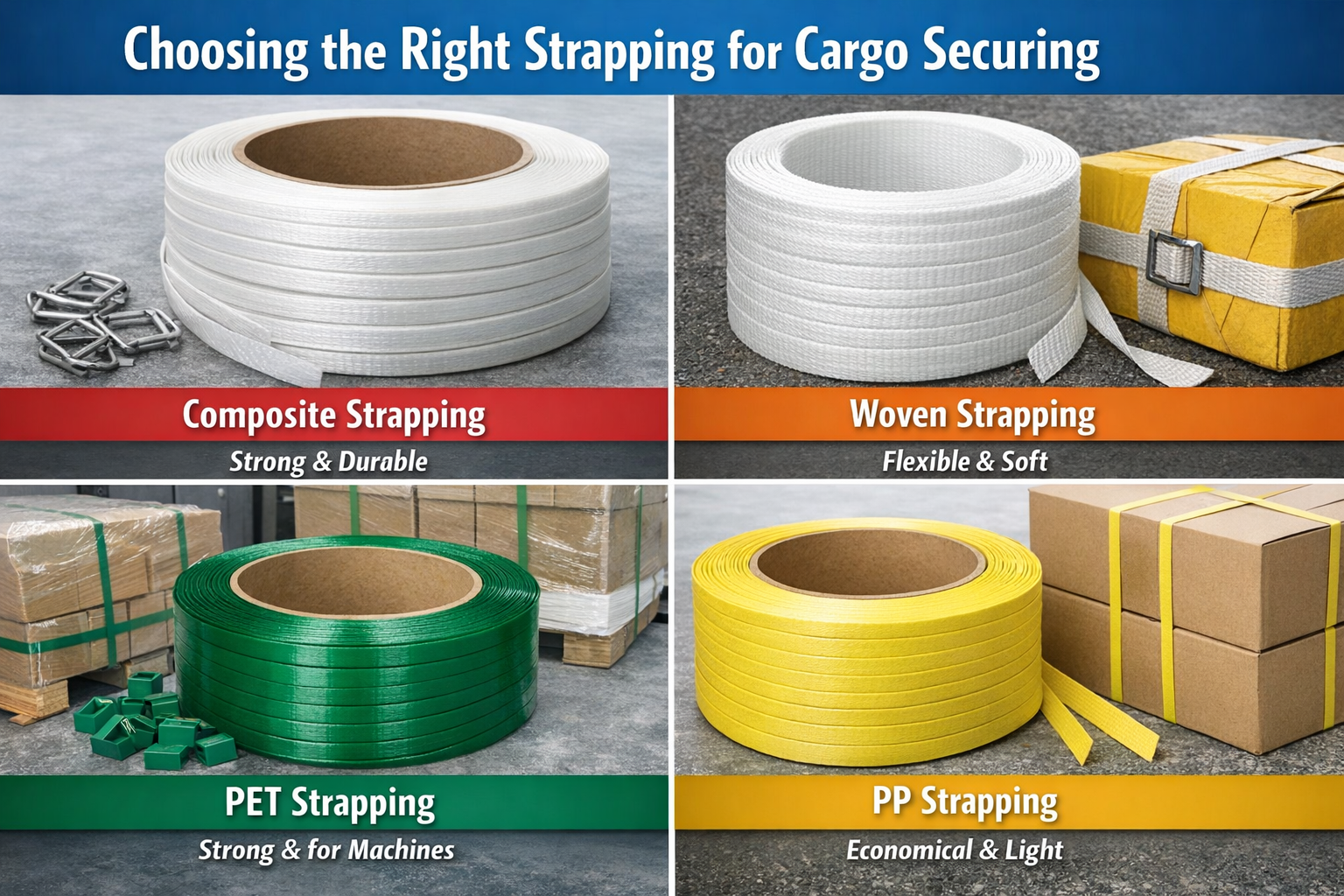
Composite straps are manufactured from high-tenacity polyester yarns embedded within a polymer matrix, delivering exceptional tensile strength combined with controlled elasticity. This allows the strap to maintain consistent load restraint while absorbing dynamic forces that occur during transit.
2.2 Non-Corrosive and Weather-Resistant Performance
Unlike steel strapping, composite straps are inherently resistant to moisture, salt air, chemicals, and UV exposure. This makes them particularly suitable for steel exports, long storage periods, and marine environments where corrosion can compromise traditional materials.
2.3 Enhanced Safety and Handling Efficiency
Composite straps eliminate recoil risks associated with steel strapping and significantly reduce handling injuries. Their lighter weight and flexibility improve ergonomics while enabling faster application without sacrificing load security.
3. Selecting the Right Composite Strap for Steel Applications
3.1Matching Strap Strength to Load Weight
Composite straps are available in various widths and breaking strengths, allowing precise alignment with load weight and geometry. Steel coils and heavy plates typically require wider straps with higher working load limits, while bundled profiles may use narrower configurations with multiple application points.
3.2 Compatibility with Wire Buckles
Proper buckle selection is essential to overall system performance. Heavy-duty wire buckles designed for steel applications provide high friction grip and prevent strap slippage under sustained tension, ensuring the strap-buckle system functions as a unified restraint.
3.3 Considering Transport Mode and Duration
Long-haul and intercontinental shipments require strapping systems that retain tension over time. Composite straps excel in maintaining performance during extended journeys, particularly where environmental exposure or vibration is unavoidable.
4. Preparing Steel Loads Before Strapping
4.1 Assessing Load Geometry and Center of Gravity
Before strapping begins, steel products should be evaluated for weight distribution and balance. Uneven or offset centers of gravity require additional restraint points to prevent rotational movement during transit.
4.2 Surface Preparation and Load Alignment
Steel surfaces should be free from loose scale, oil, or debris that may reduce strap friction. Products must be aligned tightly to minimize voids, as gaps increase movement risk and reduce overall load stability.
4.3 Using Edge Protection and Dunnage
Sharp edges are common in steel products and can damage straps if left unprotected. Edge protectors, corner boards, and wooden dunnage distribute pressure evenly and significantly extend strap service life while protecting both cargo and container structure.
5. Best Practices for Applying Composite Straps to Steel Cargo
5.1 Optimal Strap Positionings
Straps should be positioned perpendicular to load movement forces, particularly across the center of mass. For coils and plates, circumferential and cross-lashing patterns are often combined to prevent both rolling and sliding.
5.2 Correct Tensioning Techniques
Securing and Finishing the Strap
5.3 Securing and Finishing the Strap
Once proper tension is achieved, the strap must be locked securely within the buckle and excess material trimmed safely. Loose ends should be folded away from sharp surfaces to prevent abrasion during transit.
6. Securing Different Types of Steel Products
6.1 Steel Coils and Rolls
Steel coils require special attention due to their rolling potential. Composite straps are commonly used in combination with coil saddles, timber blocking, and cross-lashing patterns to prevent axial and lateral movement.
6.2 Steel Plates and Sheets
Flat steel products benefit from multiple parallel straps applied evenly across the load. Composite straps adapt well to stacked configurations, maintaining pressure distribution without damaging surface finishes.
6.3 Pipes, Tubes, and Structural Sections
Bundled steel profiles often vary in shape and length, creating securing challenges. Composite straps conform to irregular geometries and work effectively with spacers and chocks to stabilize bundled loads.
7. Safety and Compliance Considerations
7.1 Reducing Injury Risk in Steel Handling
Composite straps significantly lower injury risk by eliminating sharp edges and recoil hazards. This is particularly important in steel yards and ports where manual handling remains common.
7.2 Meeting International Load Securing Standards
Properly applied composite strap systems support compliance with international transport regulations such as CTU Code and EN load restraint guidelines. Documentation of strap specifications and application methods further strengthens compliance.
7.3 Inspection Before Shipment
Final inspection should verify strap tension, buckle engagement, edge protection placement, and overall load stability. Any compromised components must be replaced before release.
8. Maintenance and Reuse Guidelines
8.1 Inspecting Composite Straps for Wear
Although composite straps are durable, they should be inspected for fraying, cuts, or deformation before reuse. Damaged straps should be removed from service to maintain safety margins.
8.2 Proper Storage Practices
Straps should be stored in dry, shaded environments to preserve material integrity. Organized storage reduces contamination and improves operational efficiency.
8.3 Tool and Accessory Maintenance
Tensioners, buckles, and cutters should be regularly inspected and maintained to ensure consistent performance and accurate tension application.
Conclusion: A Smarter Approach to Steel Load Securing
Securing steel products demands a load-restraint solution that balances strength, adaptability, and safety under demanding transport conditions. Composite straps provide a modern alternative to traditional steel strapping, delivering controlled tension, corrosion resistance, and enhanced worker safety.
By following best practices in strap selection, load preparation, application techniques, and inspection, steel manufacturers and exporters can significantly reduce cargo damage, improve compliance, and optimize logistics performance. In an industry where margins are tight and risks are high, composite straps represent a strategic investment in safer, more reliable steel transportation.
Related Posts
Top 5 Common Mistakes in Cargo Securing and How to Avoid Them

Export Packaging Case Study: Using Composite Strapping Efficiently
