 Skip to content
Table of Contents
Categories

Jessie
Cord Strapping for Palletized Cargo
1. Introduction to Cord Strapping
1.1 Definition and purpose of cord strapping
Cargo today is exposed to increasingly complex transport conditions, including longer routes and mulCord strapping is a load-securing material engineered from high-tenacity polyester filaments encapsulated within a protective polymer coating. The structure is designed to deliver high tensile strength while maintaining flexibility under dynamic loads. Its primary function is to restrain palletized cargo safely during handling, storage, and transportation. Unlike rigid strapping materials, cord strapping accommodates load movement without sudden failure. This performance profile makes it suitable for demanding industrial and logistics applications.tiple handling points. Each stage of transportation introduces forces that can compromise load stability if not properly managed. Effective cargo securing plays a critical role in preventing load shift, structural damage, and safety incidents. Beyond protecting goods, proper securing also safeguards personnel and transport equipment. As a result, professional load restraint systems are a fundamental requirement in modern logistics operations.
1.2 Importance in securing palletized cargo
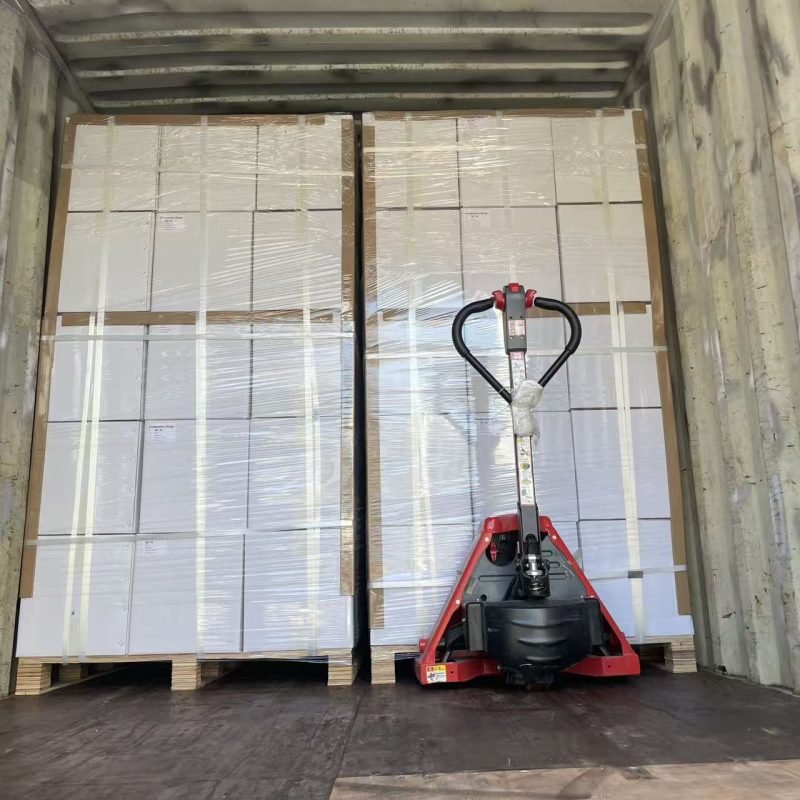
Palletized cargo is exposed to continuous mechanical stresses throughout the supply chain. Inadequate load restraint increases the risk of shifting, collapse, or damage during transit. Cord strapping provides controlled load containment by maintaining tension even when subjected to vibration and impact. Effective pallet securing reduces cargo loss and improves operational safety. Proper strapping is therefore a critical component of professional cargo securing systems.
1.3 Role in modern logistics and export packaging
Modern logistics operations prioritize safety, consistency, and compliance. Cord strapping supports these requirements through predictable performance and ease of application. Its resistance to environmental factors makes it suitable for export packaging and long-distance transport. The material aligns with standardized load securing practices used across global supply chains. As transport conditions become more complex, cord strapping plays an increasingly important role in professional packaging solutions.
2. Understanding Palletized Cargo and Securing Challenges
2.1 Common pallet types and load configurations
Palletized cargo includes a wide range of load formats, from uniform cartons to irregular industrial components. Wooden pallets remain common, alongside plastic and metal alternatives. Loads may be stacked, unitized, or combined with intermediate packaging materials. Each configuration influences load stability and securing requirements. Accurate assessment of pallet and load characteristics is essential for effective restraint.
2.2 Risks of load shifting and instability
Load instability is a primary cause of cargo damage and safety incidents. Movement can occur when loads are insufficiently restrained or when securing materials lose tension. Shifting loads may compromise pallet integrity or create hazards during handling. These risks increase during long-distance or multimodal transport. Reliable strapping systems are necessary to mitigate instability throughout the journey.
2.3 Impact of transport forces on palletized goods
Transport exposes palletized goods to longitudinal, lateral, and vertical forces. Acceleration, braking, vibration, and road or sea conditions all contribute to load stress. Rigid securing methods may transfer these forces directly to the cargo. Cord strapping manages these stresses through controlled elongation. This characteristic helps maintain load security under variable transport conditions.
3. Material Composition and Performance Characteristics
3.1 Polyester filament structure and coating
Cord strapping consists of parallel polyester filaments that provide the primary load-bearing capacity. These filaments are encased in a polymer coating that protects against abrasion and environmental exposure. The coating also enhances grip when used with mechanical buckles. This construction ensures consistent performance under high tension. The material structure supports both strength and flexibility.
3.2 Tensile strength and controlled elongation
High tensile strength enables cord strapping to secure heavy palletized loads effectively. Controlled elongation allows the strap to absorb dynamic forces without permanent deformation. This behavior reduces peak loads on both cargo and securing points. Unlike brittle materials, cord strapping maintains tension over time. This performance is critical for transport environments with continuous movement.
3.3 Resistance to moisture, abrasion, and weather
Cord strapping is inherently resistant to moisture and does not corrode. The protective coating limits wear from pallet edges and cargo surfaces. UV resistance supports performance during outdoor storage or transport. These properties contribute to predictable behavior in varied environments. Environmental resistance is essential for export and intercontinental shipments.
4. Benefits of Cord Strapping for Pallets
4.1 Load stability and shock absorption
Cord strapping provides stable load containment by maintaining consistent tension. Its ability to absorb shocks reduces the transfer of impact forces to the cargo. This minimizes the risk of product damage and pallet failure. Stable loads also improve handling safety during loading and unloading. Shock absorption is a key advantage in dynamic transport conditions.
4.2 Operator safety and ease of handling
Operator safety is a central consideration in professional packaging systems. Cord strapping is lightweight and does not have sharp edges. This reduces the risk of cuts and recoil-related injuries. Application requires less physical effort compared to steel strapping. Improved handling characteristics contribute to safer working environments.
4.3 Cost efficiency and lifecycle advantages
Cord strapping offers cost benefits through reduced cargo damage and lower injury risk. Its durability supports longer service life compared to single-use materials. In some applications, controlled reuse is possible under defined inspection criteria. Lower total cost of ownership is achieved through improved safety and reliability. Lifecycle performance is a key evaluation factor for industrial users.
5. Comparison with Other Pallet Strapping Solutions
5.1 Cord strapping vs steel strapping
Steel strapping provides high static strength but limited flexibility. It does not absorb dynamic forces and may damage cargo or pallets. Handling steel strapping presents safety risks due to sharp edges and recoil. Cord strapping delivers effective load restraint with improved safety and adaptability. For many palletized loads, it represents a safer alternative.
5.2 Comparison with PET and polypropylene strapping
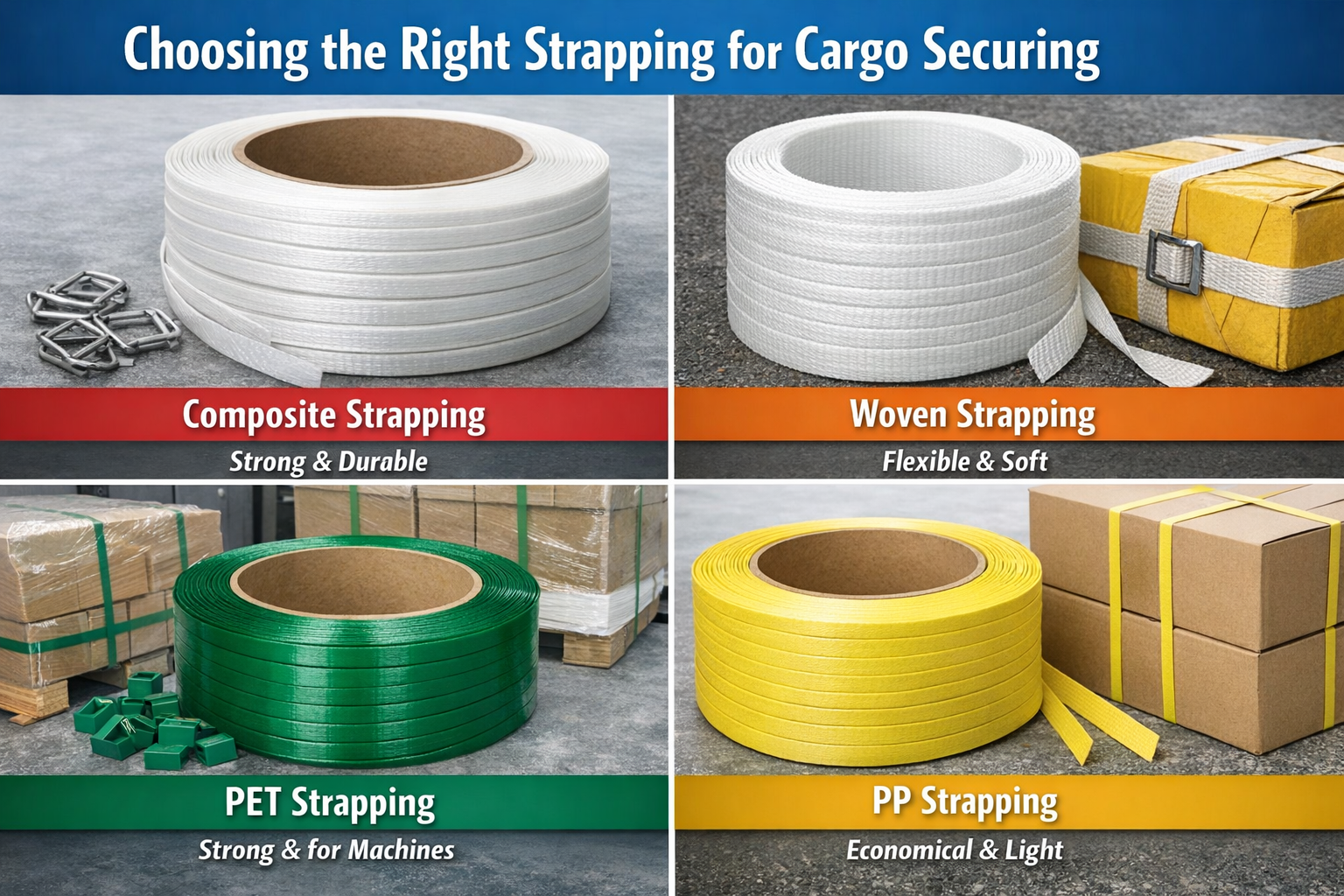
PET and polypropylene strapping are commonly used for lighter pallet loads. Their performance may be insufficient for heavy or dynamic shipments. Cord strapping offers higher tensile capacity and better shock absorption. It is suitable for demanding logistics environments. Material selection should reflect load and transport conditions.
5.3 Selecting the right solution for specific applications
Strapping selection must consider load weight, stability, and transport forces. Lighter goods may require less robust solutions. Heavy or high-risk shipments benefit from cord strapping performance. Application-specific assessment ensures appropriate material choice. Correct selection improves safety and efficiency.
6. Selecting the Right Cord Strapping for Palletized Cargo
6.1 Determining required breaking strength and widt
Breaking strength must exceed the forces expected during transport. Strap width influences load distribution and surface pressure. Insufficient specification increases failure risk. Overspecification may lead to unnecessary cost. Accurate calculation supports safe and efficient securing.
6.2 Matching strapping specifications to pallet weight
Pallet weight directly affects strapping requirements. Heavier loads require higher strength and often multiple strapping points. Load geometry also influences strap placement. Specifications should reflect worst-case transport conditions. Matching performance to load ensures reliability.
6.3 Considering transport mode and environmental conditions
Transport mode determines the type and magnitude of forces acting on the load. Road, rail, and sea transport present different securing challenges. Environmental exposure may include moisture, temperature variation, or UV radiation. Cord strapping performs consistently across these conditions. Consideration of transport factors is essential for correct selection.
7. Tools and Accessories for Cord Strapping
7.1 Tensioning tools and their correct use
Correct tensioning is critical to load security. Manual and pneumatic tensioners are commonly used with cord strapping. Tool selection should match strap width and strength. Improper tensioning reduces system effectiveness. Operator training ensures consistent results.
7.2 Buckles and joining methods
Mechanical buckles maintain tension and secure strap ends. Buckle type must be compatible with the strap specification. Correct threading and alignment are essential for holding strength. Improper joining can lead to slippage. System integrity depends on correct component use.
7.3 Edge protectors and load protection accessories
Edge protectors distribute strap pressure across load surfaces. They prevent localized damage and reduce strap wear. Accessories improve overall securing performance. Their use is recommended for sharp or fragile edges. Supporting components enhance system reliability.
8. Best Practices for Applying Cord Strapping to Pallets
8.1 Proper strap positioning and alignment
Straps should secure the load directly to the pallet base. Correct alignment ensures even force distribution. Poor positioning may allow load movement. Consistent application improves repeatability. Positioning is fundamental to effective restraint.
8.2 Achieving correct tension without damaging cargo
Tension should restrain the load without deformation. Excessive force can damage packaging or pallets. Insufficient tension compromises stability. Cord strapping allows controlled tightening. Balanced tension is essential for safe transport.
8.3 Securing strap ends and final load checks
Strap ends must be properly locked and trimmed. Loose ends can reduce performance or create hazards. Final inspection confirms correct application. Load checks should be routine. Verification reduces the risk of failure.
9. Safety, Inspection, and Maintenance Guidelines
9.1 Safe handling and tensioning procedures
Operators must follow established safety protocols. Proper handling reduces injury risk. Cord strapping improves safety compared to rigid materials. Procedures should be clearly documented. Consistency supports safe operations.
9.2 Inspection before and after use
Straps should be inspected for damage or wear. Fraying or coating damage may reduce performance. Inspection ensures suitability for continued use. Post-use checks support reuse decisions. Regular inspection is a core safety practice.
9.3 Guidelines for reuse and replacement
Reuse should only occur within defined limits. Damaged or overstretched straps must be discarded. Clear replacement criteria prevent unsafe practices. Proper disposal avoids unintended reuse. Guidelines protect both cargo and personnel.
10. Compliance, Sustainability, and Long-Term Best Practices
10.1 Cargo securing standards and compliance considerations
Load securing must align with applicable regulations and guidelines. Compliance reduces legal and operational risk. Cord strapping supports standardized securing methods. Documentation supports audits and inspections. Compliance is a key operational requirement.
10.2 Sustainability benefits and waste reduction
Cord strapping contributes to sustainability through durability and reduced waste. Resistance to corrosion extends service life. Controlled reuse further reduces material consumption. Sustainability is increasingly important in logistics operations. Material choice supports environmental objectives.
10.3 Developing standardized pallet securing procedures
Standardized procedures improve consistency and safety. Documentation supports training and operational control. Regular review ensures continued effectiveness. Standardization reduces variability and risk. Long-term performance depends on disciplined practices.
Related Posts

Top 5 Common Mistakes in Cargo Securing and How to Avoid Them

Export Packaging Case Study: Using Composite Strapping Efficiently
